
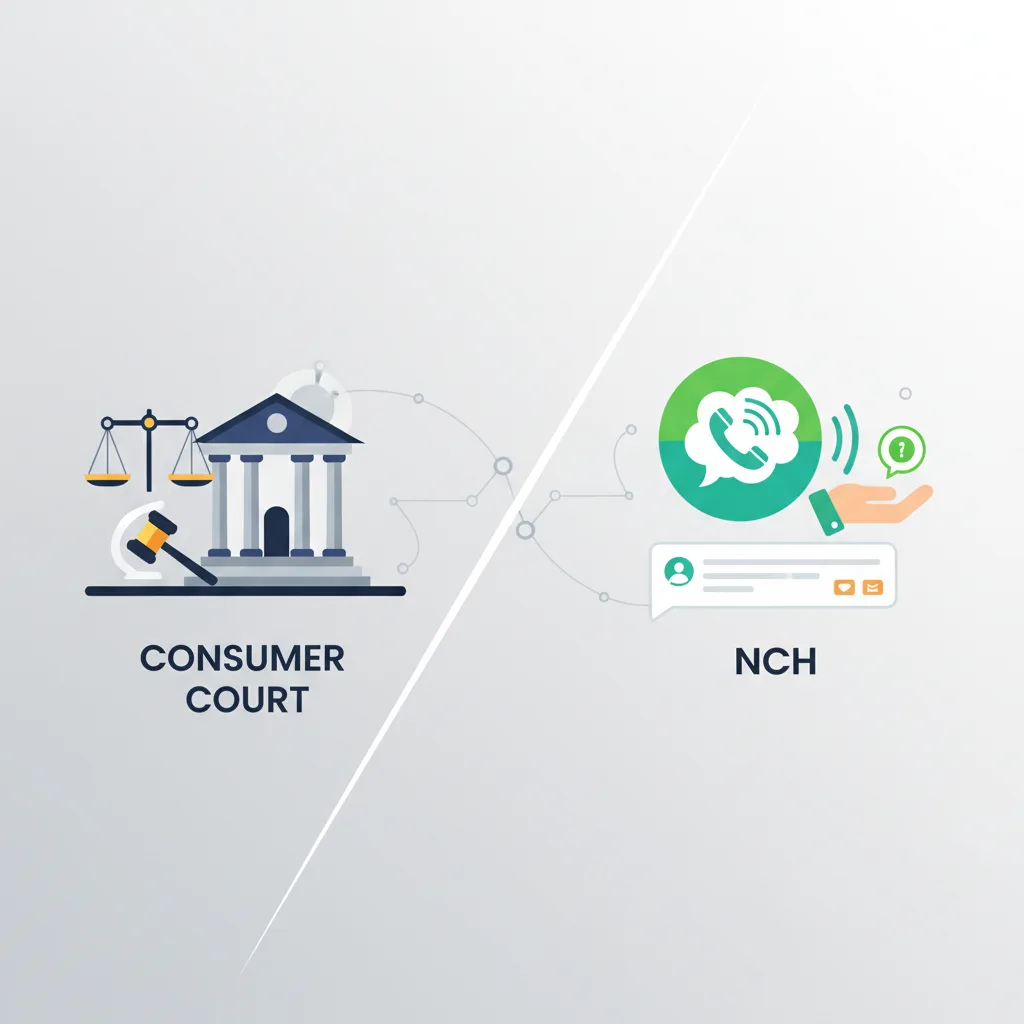
Ever bought something that turned out to be a complete dud? I know the feeling. You anticipate a product performing as promised, not arriving defective or misrepresented. You are entitled to a fix, but navigating consumer redress in India can feel like an uphill battle. A report from the Department of Consumer Affairs reveals millions of consumer complaints get filed each year, which highlights the urgent need for real solutions. Should you approach Consumer Court right away, or does contacting the National Consumer Helpline (NCH) make more sense initially? Over the years, we have walked consumers through these choices, and I am here to simplify things for you.
Understanding the National Consumer Helpline (NCH)
Think of the NCH as a government funded program. It supplies information, guidance and support to consumers across India. It should be your first destination for any consumer issue. This resource does not cost anything, and it can be exceptionally helpful in settling straightforward disputes. I often suggest people begin here because it is less formal and can often produce quicker results.
What the NCH Offers:
- Information: They tackle questions related to consumer rights, product standards and relevant rules.
- Guidance: They point you in the right direction when managing specific consumer problems, like a faulty item or unfair service.
- Mediation Assistance: The NCH acts as an intermediary between you and the company to encourage a friendly resolution. This often involves reaching out to the company on your behalf and negotiating a settlement.
- Complaint Registration: They officially record your complaint, which you can then monitor.
I have observed the NCH successfully resolve issues like incorrect billing, warranty disagreements and service delays. For example, one of my colleagues was having problems with their internet service provider consistently overcharging them. After contacting the NCH, the helpline intervened, and the internet provider corrected the billing errors and issued a refund. This saved my colleague the hassle of going to court.
When to Approach Consumer Court: Key Considerations
While the NCH serves as a great starting point, there are situations where you must escalate your complaint to the Consumer Court. This represents a more formal legal path, but it can deliver a more definitive resolution, particularly when significant money or serious matters are at hand. I generally recommend this when other avenues have proven unsuccessful.
Critical Factors That Justify a Consumer Court Case:
- Substantial Disputes: If a large sum of money hangs in the balance (based on the jurisdictional limits of various Consumer Courts), going to court is often the only way to recover your losses.
- Unresolved Problems: If you have already reached out to the company and the NCH without getting anywhere, then it is time to think about legal action.
- Serious Issues: Scenarios involving defective or dangerous goods that result in injury frequently necessitate Consumer Court intervention.
- Unfair Business Practices: If you suspect a company engages in misleading advertising, false claims or other unethical conduct, a Consumer Court has the authority to investigate and take action.
- Consumer Rights Violations: If a company has clearly infringed upon your consumer rights (for instance, refusing to honor a warranty or providing substandard service), you have grounds to file a consumer complaint in India through the Consumer Court.
I recently advised a client who purchased a defective car. Despite repeated attempts to get the dealership to fix the problem, they refused to cooperate. I recommended they file a consumer complaint in India through the Consumer Court. The court sided with them, ordering the dealership to either replace the car or provide a full refund. This shows how the Consumer Court can safeguard consumer rights.
Preparing Your Consumer Court Case
If you determine to approach Consumer Court, preparation becomes critical. You must gather all relevant paperwork, including:
- Purchase receipts
- Warranty documents
- Communications with the company
- Photos or videos of the faulty item
- Medical records (if relevant)
- Any other evidence supporting your claim
It additionally proves helpful to draft a clear and concise complaint that outlines the specifics of your situation, the outcome you are seeking and the legal basis for your claim. While you can represent yourself in Consumer Court, I suggest getting legal advice from a consumer protection attorney to ensure your case is presented effectively. They can guide you through the legal procedures and increase your odds of success.
NCH versus Consumer Court: Key Differences
Here is a table that summarizes the main differences between the NCH and the Consumer Court:
| Feature | National Consumer Helpline (NCH) | Consumer Court |
|---|---|---|
| Nature | Informal, advisory | Formal, legal |
| Cost | Free | Small fee (based on the claim value) |
| Process | Mediation, information, complaint filing | Legal procedures, evidence presentation, court decision |
| Resolution | Not binding (unless both parties agree) | Binding legal order |
| Complexity | Simple, straightforward | More complex, requires legal knowledge |
| Timeframe | Generally quicker | May take longer |
| Best For | Minor problems, seeking information, initial complaint | Large disputes, unresolved issues, serious grievances |
Why Consumer Awareness Matters
The optimal way to protect yourself as a consumer involves staying informed and taking action. Understand your rights, keep records of your purchases and speak up if you encounter a problem. Whether you decide to contact the NCH or file a consumer complaint in India through the Consumer Court, you retain the power to hold businesses responsible and ensure equitable treatment. I believe informed consumers contribute to a healthier and more ethical marketplace.
Talk to a Verified Lawyer Online
Send a legal notice for money recovery with expert support from Vakilsearch