
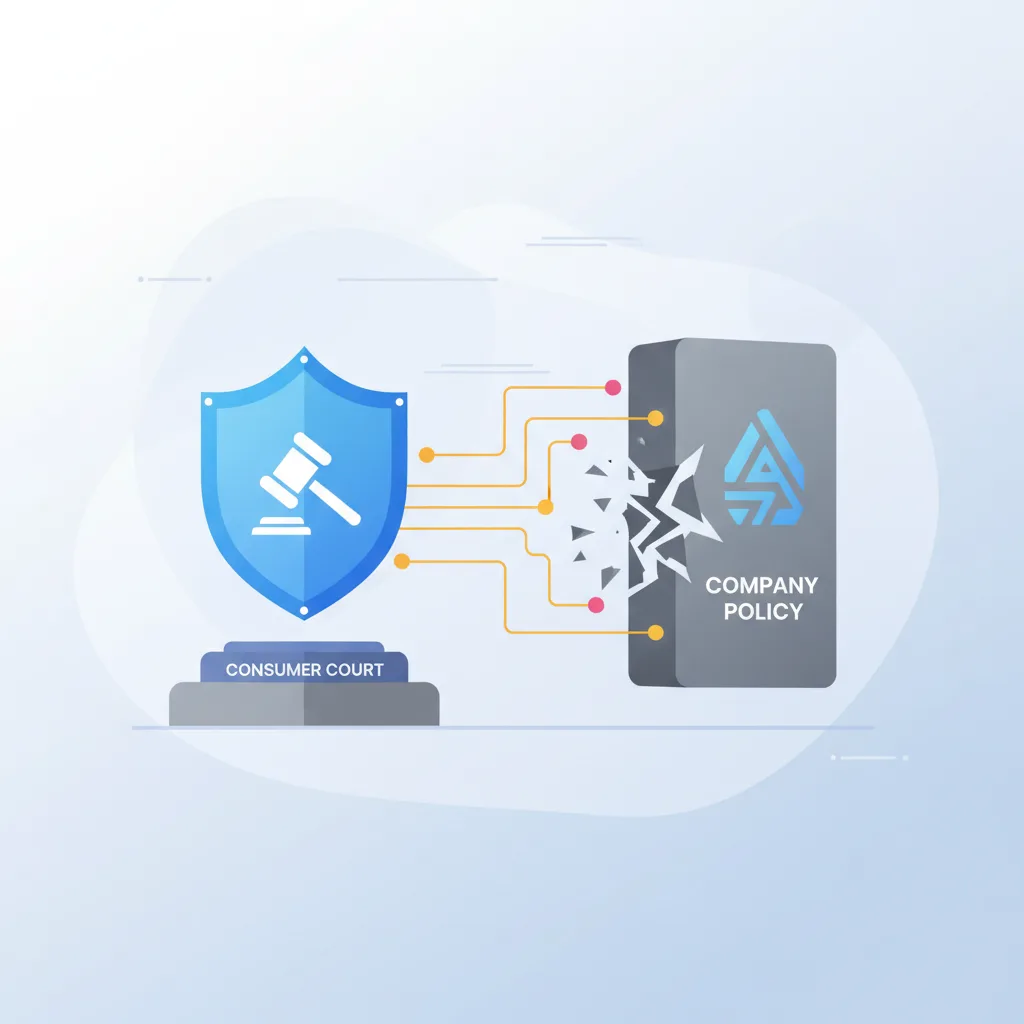
Did you ever just gloss over the fine print at the bottom of a contract? A lot of people do. However, those seemingly insignificant phrases, especially ones like “Subject to Company Policy,” can actually have a massive impact on your rights as a customer. I remember reading a report from the Ministry of Consumer Affairs back in 2019. It pointed out that a ton of consumer complaints stemmed from how companies interpreted and used these policies. So, the big question is: How do consumer courts view these policies, and what can you do if a company’s policy feels totally unfair?
Understanding “Subject to Company Policy”
“Subject to Company Policy” means that whatever you are buying or getting is tied to the company’s rules. These rules could be about warranties, how returns work, refund processes, what level of service to expect and how to handle disagreements. The idea is to create a standard and unbiased way to deal with customers. The problem is when these policies are not clear. When they cause confusion or put unfair limits on what customers can do, it could violate consumer rights.
I have seen businesses use their own policies to reject valid claims or avoid doing what they are supposed to. For example, a customer’s warranty claim gets denied because the company’s policy says the damage is “not covered,” even if the damage was from a manufacturing issue. Consumer courts become extremely important in these situations in order to get fair results.
The Role of Consumer Courts in India
India’s consumer courts were created by the Consumer Protection Act. They are there to give consumers a fast and affordable way to get justice. These courts handle issues with faulty products, poor service, unethical business practices and unfair trade moves. One of the most important things these courts do is look at how fair, reasonable and legal a company’s policies are.
These courts have the power to make companies fix problems, replace items, give refunds, pay for damages or injuries and stop illegal activities. They act as protectors of consumer rights and encourage businesses to act ethically.
How Consumer Courts Handle “Subject to Company Policy”
Consumer courts do not just automatically approve a company’s policy. They check to see if the policy is fair, easy to understand and not oppressive. They use a few principles to make their decisions:
- Reasonableness: The policy has to be fair and not too hard on the consumer. For instance, a policy that says a consumer has to pay to ship a big appliance back for warranty repairs might not be seen as reasonable.
- Transparency: The consumer needs to clearly understand the policy before they make a purchase. Confusing rules or fine print that is hard to find or understand might be ignored by the court.
- Consistency: The company needs to apply the policy the same way for all customers. They cannot discriminate or be unfair in how they use it.
- Compliance with Law: The policy has to follow all the laws that apply. A policy that goes against a legal right or a consumer protection law is not valid.
I once dealt with a case where a phone company would not give back a customer’s security deposit. They pointed to a policy that said deposits were nonrefundable. The consumer court agreed with the customer. They said the policy was unfair because it took away the consumer’s deposit, which they had a right to get back. The court made it clear that companies cannot use their policies to get around basic fairness.
Key Legal Precedents
Several important court decisions have shaped how consumer courts look at “Subject to Company Policy” clauses. In one major case, the Supreme Court ruled that a company could not use a policy to avoid responsibility for a defective product if the defect existed before the sale and the consumer was not at fault. The court said that companies have to make sure their products are safe and good quality. They cannot get out of this responsibility by using unclear policy language.
Another case said that companies have to give consumers clear information about their policies. The court stated that a company cannot enforce a policy if the consumer did not know about it when they made the purchase.
Steps to Take When a Company Policy Seems Unfair
If you think a company’s policy is unfair, here are the steps you should take:
- Document Everything: Keep all emails, receipts, warranties and any other relevant documents safe.
- Communicate with the Company: Try to work things out with the company directly. Explain why you think the policy is unfair and what you want them to do to fix it.
- Send a Legal Notice: If talking to the company does not work, hire a lawyer to send them a formal legal notice. This document tells the company that you have a complaint and what you want them to do about it.
- file a consumer complaint in India: If the legal notice does not get you anywhere, file an official complaint with the right consumer court. You need to provide evidence, like copies of documents and emails.
Preparing Your Consumer Complaint
When you file a consumer complaint in India, make sure you include these details:
- Your complete name and mailing address
- The complete name and mailing address of the company you are complaining about
- A clear description of what happened
- What you want the company to do to fix the problem (for example, a refund, a replacement or money for damages)
- Copies of all the important documents
Explain your case clearly and persuasively. Point out the exact parts of the policy that you think are unfair and explain how they affect your rights. Be ready to back up your arguments with laws and previous court decisions.
The Importance of Consumer Awareness
The best way to avoid unfair company policies is to be aware as a consumer. Before you buy something or use a service, carefully read the terms and conditions. Ask questions if anything is not clear. If you think something is unfair, stand up for your rights.
I truly believe that when consumers are more aware, businesses are more likely to act ethically and be responsible. If you understand your rights and how to use them, you help create a fairer marketplace.
Conclusion
The relationship between “Subject to Company Policy” statements and consumer courts is super important for protecting consumers in India. While companies have the right to create policies, these policies have to be fair, reasonable and legal. Consumer courts act as a check to make sure companies cannot use their policies to take advantage of consumers. By knowing your rights and understanding how to file a consumer complaint in India, you can protect yourself from dishonest practices and help create a more balanced marketplace.
Talk to a Verified Lawyer Online
Send a legal notice for money recovery with expert support from Vakilsearch