
Imagine tossing your hard earned dollars on a shiny new gadget, only to discover it is a lemon. Your next move could involve seeking redress through consumer court. Brace yourself; the journey might resemble a marathon more than a sprint. I recently examined a 2023 report that shone a light on a major headache: Indian courts are wrestling with nearly 50 million pending cases. This colossal backlog significantly stretches out the duration needed to adjudicate disputes. Therefore, if you are trying to get a handle on the typical timeline for consumer court cases in India, as I was, recalibrate your expectations and planning accordingly.
Understanding the Basic Timeline for Consumer Court Cases in India
The duration of consumer court cases in India is not set in stone; it ebbs and flows based on a host of factors. The Consumer Protection Act of 2019 was intended to accelerate resolutions. From my vantage point, the wheels of justice frequently turn at a more leisurely pace. I will provide a general overview of what you might anticipate. The moment you file a consumer complaint in India, the court formally notifies the opposing side.
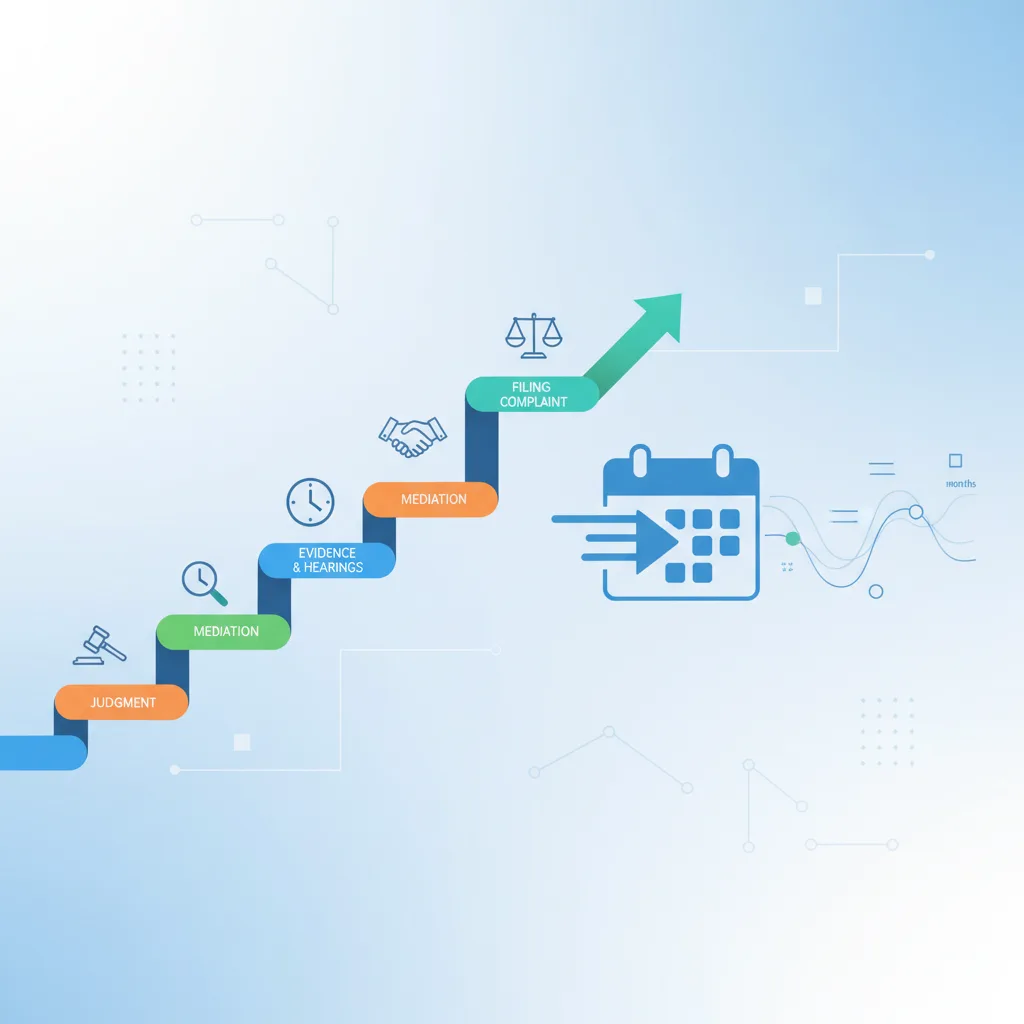
- Filing the Complaint: Once you file a consumer complaint in India, the court will send an official notification to the other party.
- Response from the Opposite Party: The other side gets a window of time (typically 30 days, potentially extended to 45) to respond to the complaint.
- Evidence and Arguments: Each side presents their evidence and lays out their arguments. This could mean handing over documents, witness statements and expert assessments.
- Hearing(s): The court convenes hearings to scrutinize the evidence and listen to what each side has to say. The number of these hearings can be all over the map.
- Final Order: Once all the evidence has been weighed and the arguments heard, the court will issue a final ruling.
Key Factors Affecting the Timeline
Several things impact the duration it takes for a consumer court to reach a verdict. Simple cases, like those involving a clearly defective product, generally wrap up quicker. More intricate cases, especially those demanding technical evaluation, expert witnesses or involving many parties, tend to drag on. That is simply how it is.
- Complexity of the Case: Simple cases with obvious issues (think a faulty product with irrefutable proof) tend to move swiftly. Complex situations involving technical details, expert testimony, or numerous parties can take more time.
- Court Backlog: The sheer volume of cases before a particular consumer court greatly influences the timeline for consumer court cases. Courts swamped with cases will, naturally, take longer to process each one.
- Cooperation of Parties: If both sides play nice and furnish the needed details promptly, the process can be sped up. Delays often crop up when one side drags their feet or throws up roadblocks.
- Evidence Available: The presence and caliber of evidence are key. Solid evidence can pave the way for a faster decision, while flimsy or missing evidence can stall things.
- Testing and Expert Opinions: If the case calls for product testing or input from specialists (say, in cases involving medical malpractice), that will pad the overall duration.
Average Timeframes for Different Stages
Pinpointing an exact figure is tough, but I can share ballpark figures for each stage. Initial Filing and Notification usually eats up one to two months. This covers drafting and submitting the complaint, followed by the court alerting the other party. This is a key consideration when you file a consumer complaint in India.
- Initial Filing and Notification: 1-2 months. Expect this for drafting and submitting the complaint and the court sending official notice.
- Response from Opposite Party: 1-2 months (counting possible extensions).
- Evidence and Arguments: 2-6 months. The duration here can vary wildly based on the case details and how well the parties work together.
- Hearings: The number of hearings can be anywhere from a handful to dozens, potentially tacking on several months to the overall timeline for consumer court cases.
- Final Order: Once all hearings wrap up, the court typically needs a month or two to hand down a final order.
Response from the Other Party: Set aside one to two months, factoring in possible extensions. Evidence and Arguments: This phase could take two to six months, with big differences depending on the case and how cooperative everyone is. Hearings: The number of hearings can vary a lot, which could add months. Final Order: After the hearings, the court usually needs a month or two. All told, a consumer court case in India might stretch from half a year to several years. More complex situations often take even longer.
Strategies to Expedite the Process
While I cannot dictate the timeline for consumer court cases, I can offer advice on ways to potentially grease the skids. A complaint that is carefully written, crystal clear and backed by strong evidence will head off hitches. Round up every scrap of paper you can find: receipts, emails and any other proof to back up your claims.
- Prepare a Strong Complaint: A well written complaint that features clear facts and solid evidence can keep things moving.
- Gather All Necessary Evidence: Round up all the pertinent documents, receipts, emails and other evidence to bolster your argument.
- Be Responsive and Cooperative: Jump on any requests from the court or the other side.
- Consider Mediation or Conciliation: Mull over alternative dispute resolution methods like mediation, which can often lead to quicker results.
- Seek Legal Advice: Chatting with a lawyer who specializes in consumer law can help you steer through the process more efficiently.
Understanding Condonation of Delay
The Consumer Protection Act has a provision for filings submitted beyond the deadline under certain conditions. Therefore, if you file a consumer complaint in India past the due date (usually two years from the date of the incident), the court still might hear your case if you can offer a good excuse. Legitimate reasons might include a serious illness, lack of knowledge or other unavoidable events. Remember that late filings are not automatically accepted; the court must give the green light.
The Impact of E-Filing and Technology
Consumer courts are gradually easing delays by using e-filing and other tech tools. E-filing accelerates the submission of complaints and documents, while online tracking makes things more transparent. The growing adoption of technology has the potential to greatly boost the efficiency of the consumer court system. This is important when you file a consumer complaint in India.
The Role of Legal Representation
While you are not required to have a lawyer, one can be a big help when dealing with consumer court. A lawyer can guide you when you file a consumer complaint in India. A lawyer can help you build a rock solid complaint and spell out your position effectively. Lawyers find and present persuasive evidence. They know the court rules and how the system works. They negotiate with the other side.
- Draft a strong complaint and present your case effectively.
- Find and present evidence in a compelling way.
- Know the legal ropes and steer through the court system.
- Negotiate with the other party.
A good lawyer boosts your odds of success and might shorten the timeline for consumer court cases.
Conclusion
The timeline for consumer court cases in India bounces around a lot. Knowing the factors that play into it and taking proactive steps can help you prepare and possibly speed things up. Build a solid case, work well with everyone and think about alternative resolution methods to improve your chances of a fast and positive outcome to your consumer problem. Getting legal advice can be useful when facing these challenges.
Talk to a Verified Lawyer Online
Send a legal notice for money recovery with expert support from Vakilsearch